
How to Promote and Leverage Press Coverage for Long-Term Brand Growth

Why Press Coverage Is So Valuable
Press coverage is one of the most versatile assets your brand can earn. A strong mention in a reputable outlet doesn’t just create a moment of visibility — it creates ongoing leverage across marketing, sales, SEO, and brand perception — a key reason PR should be a priority for your brand awareness strategy. The impact compounds over time, especially as authoritative media signals increasingly influence search rankings and AI-driven discoverability.
Press coverage can:
Build trust instantly through third-party validation
Increase brand and product visibility among key audiences
Generate leads and influence decision-makers
Strengthen SEO through high-authority backlinks and referral traffic
Increase GEO & AI discoverability, as credible editorial mentions are increasingly used to train and inform search and AI-generated results
Support brand positioning by reinforcing how your market understands you
Enhance sales conversations with recognizable credibility signals
Elevate executives as authorities and thought leaders in their field
Fuel your broader content strategy across social, website, and campaigns
A single piece of coverage can continue delivering value long after publication — if you know how to use it.
Assuming you’re monitoring for press coverage (you can use a paid tool or service or even Google Alerts), first make sure it’s positive and relevant coverage you want to share.
Check Context: Ensure your inclusion is positive and relevant. For example, a SaaS mention buried in an article about “tech layoffs” may not be the story you want to spotlight.
Fix Inaccuracies: Request corrections for misspellings, misquotes, or errors before promoting.
Evaluate Tier: Ask, “Would my target clients recognize and respect this outlet?”
All clear? Congrats! Now, take these steps to promote your press coverage (and read on below for more details):
What to Do When You Get Good Press: Your 10-Step Checklist
First, review and assess before you share. Not all coverage should be promoted blindly.
Save the article URL and take a screenshot
Post on LinkedIn (with pull-quote + tag the outlet and reporter)
Check if the outlet posted it on their social accounts — if yes, repost or share their version
Share on Instagram Stories with a link sticker
Add the news to your website’s press page (and the outlet logo to your trust bar, if applicable)
Forward to your sales team as a conversation hook
Include the clip and link in your next client or investor newsletter
Archive the coverage in a shared folder for future proposals/onboarding decks
Set a reminder in 30 days to repurpose the coverage (e.g. turn a quote into a graphic, reference it in a future pitch)
How to Promote Press Coverage on Social Media
Social is often the first place to amplify press hits — it’s fast to update, easy to make engaging, and rare that you wouldn’t want to share positive buzz with your followers.
How to do it well:
Make it visual:
Screenshots of the article or clip
The publication’s masthead/logo
A headshot, team photo, or product image for context
Write non-braggy, engaging copy:
Be gracious: “Thrilled to share our perspective featured in…”
Quote directly from the article or clip (dynamic pull-quotes perform well)
Tag the outlet and the reporter
Share why it matters to your clients or community
Be timely: Post within a few days of publication if possible.
By platform:
LinkedIn: Best for B2B, SaaS, and professional services. Include context, a pull-quote, and the link (in the post or comments).
Instagram posts: Use styled visuals; captions should highlight what you said or created, not just “we’re in X magazine.”
Instagram stories: Share screenshots with link stickers, add celebratory GIFs or behind-the-scenes context — whatever aligns with your brand’s tone.
Twitter/X: Great for tagging reporters and outlets, but keep your copy short and concise.
Facebook: Useful for community-based firms (design, local services); emphasize the human story.
Pro tips:
First, check the social feeds of the outlet. If they shared your story, repost or share their post — it boosts engagement and validates your coverage. If they didn’t, that’s fine; share your own with context.
Post in partnership with the outlet when possible: If the media brand has an active social presence, reach out to see if they'll tag you in their own post or collaborate on a shared post. This dramatically expands reach beyond your own audience to theirs. In some cases, particularly with lifestyle and design publications, the outlet will share the feature themselves — if they do, share their post rather than your own. Third-party amplification is more credible than self-amplification.
Grid vs. Stories: If you maintain a curated aesthetic for your IG grid, skip the feed post and share the coverage to your Stories instead — you get the amplification without disrupting your visual brand. Then save it to a dedicated Highlight (label it "Press," "Features," or "As Seen In") so it lives permanently on your profile. See example from Studio McGee below!
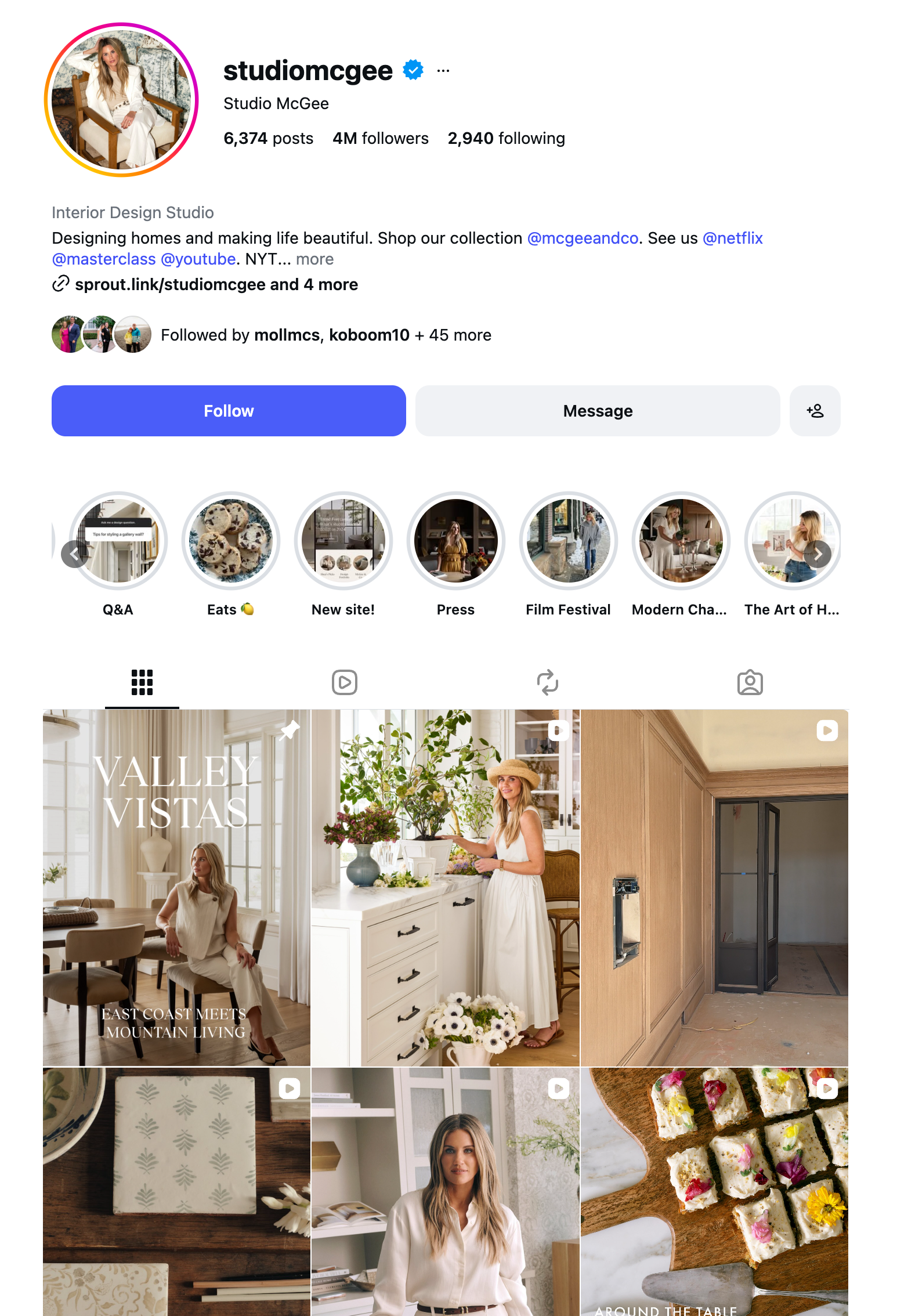
Notice how Studio McGee (@studiomcgee) has a dedicated 'Press' Highlight on their profile. It's permanent, prominent, and doesn't disrupt the feed aesthetic.
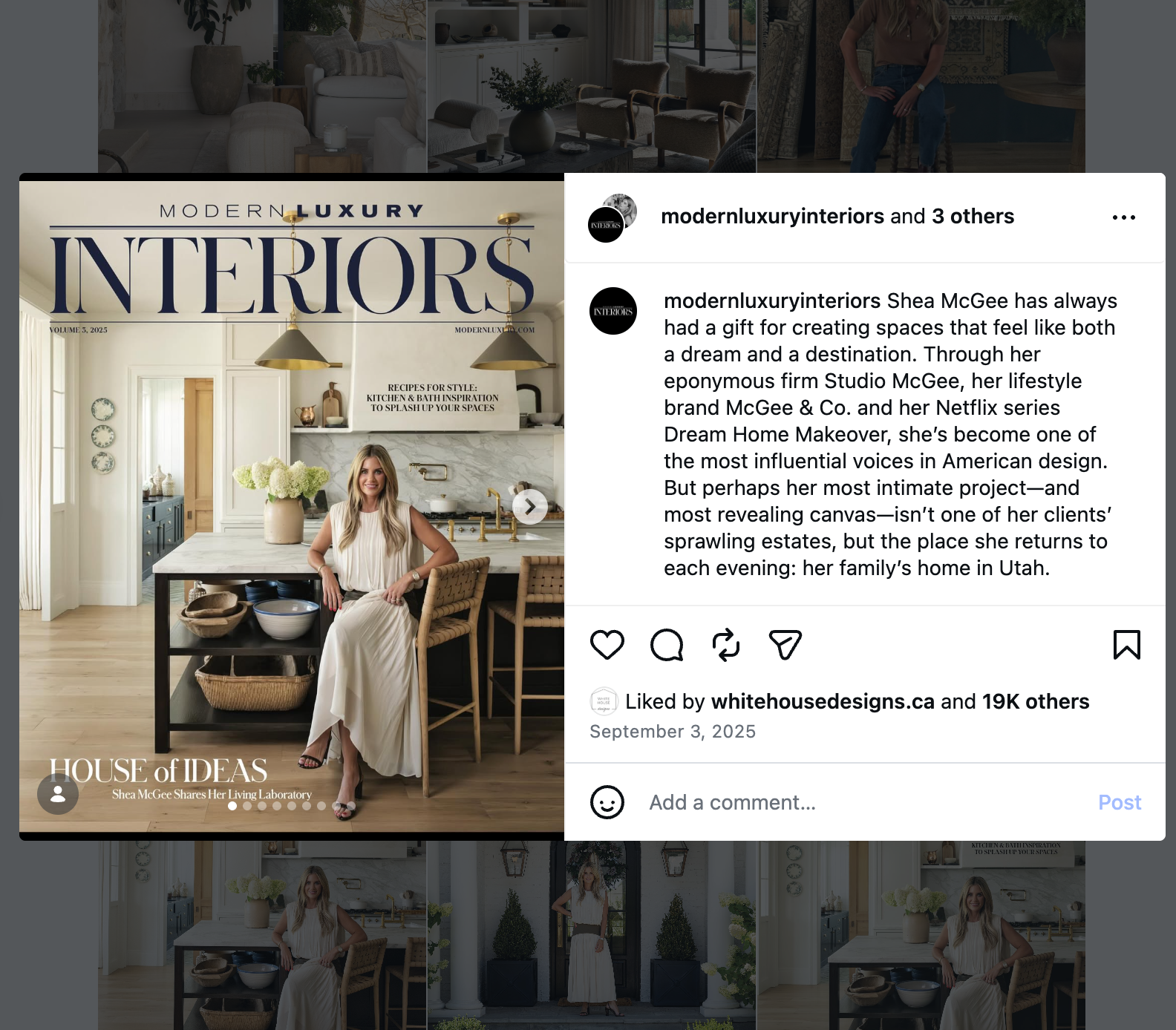
This post came from the publication's account, @modernluxuryinteriors, not Studio McGee's — netting 19K likes and the brand didn't have to say a word about itself. When a media outlet posts your coverage, their audience receives it as editorial, not promotion. Share their version when you can.
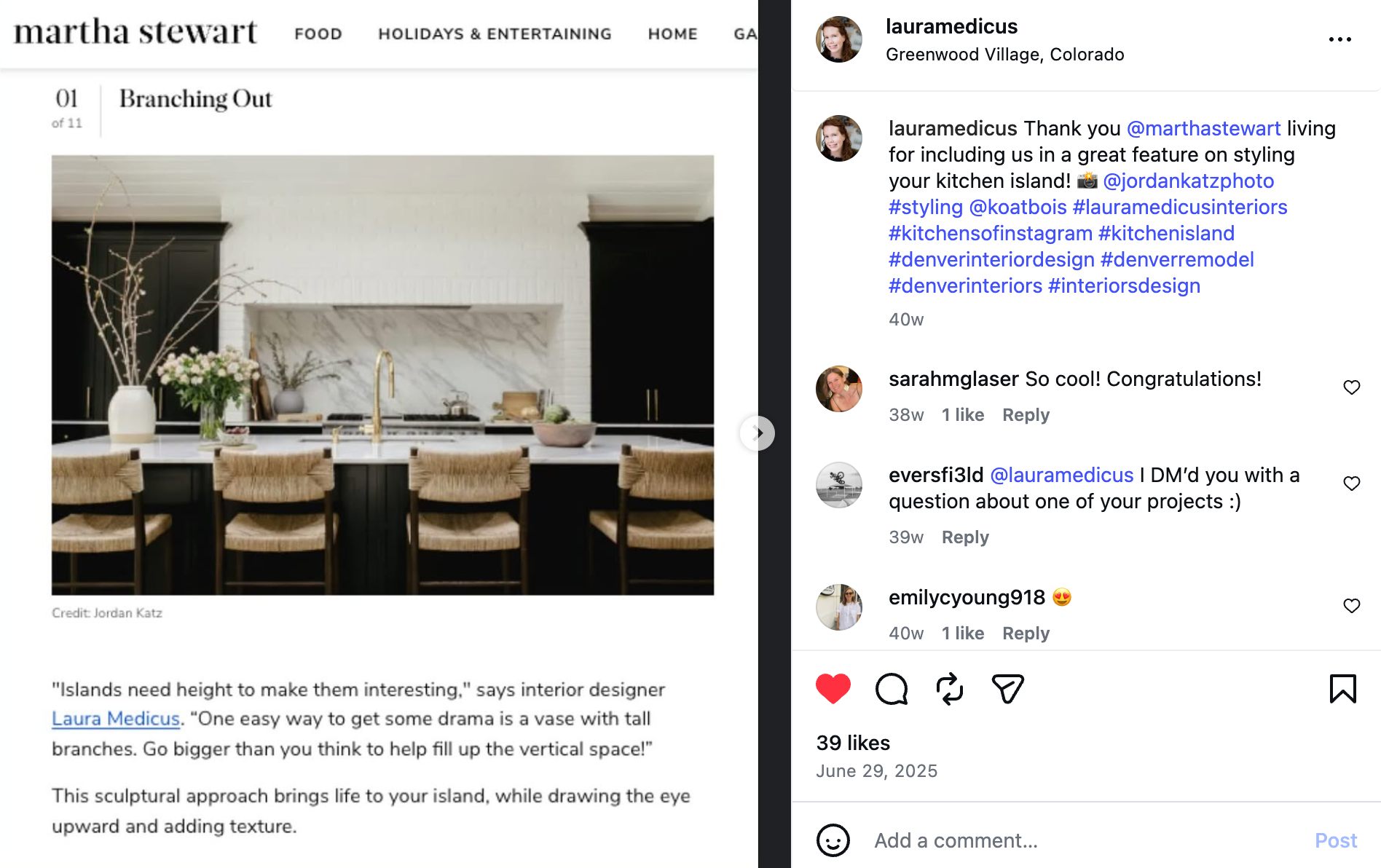
Notice how interior designer @lauramedicus tags Martha Stewart and her photographer’s accounts, and uses niche local hashtags (#denverinteriordesign, #kitchensofinstagram) — not just generic ones. One piece of press becomes discoverable to three different audiences simultaneously: the outlet's followers, the photographer's network, and anyone searching those hashtags.
Read more about Laura’s PR journey here.
How to Promote Press Coverage on Your Website
Your website represents you, your products and/or services, and is central to your credibility. Adding your press coverage here validates your expertise and can help convert leads. Where to place it?
Press Page: Once you have a handful of press hits (~5-6, though no hard rule), consider creating a press page to show off your brand mentions in the media. Include outlet logos, titles, dates, and links. You might also include a clip or quote.
Trust Bar / Logo Strip: Add instantly recognizable credibility right on your homepage. A note: you will see larger brands prioritize customer logos on their home page. This is more useful when your brand is a household name, like Zoom or Hubspot. Customer logos are great, but in smaller or growing companies, press logos are often the more recognizable and influential.
About/Company Page: Consider adding a “Featured in…” section to underscore authority.
Product Pages: Awards, analyst coverage, and trade media coverage may be most impactful here (e.g., “Rated best UI by TechRadar”).
Landing Pages: Include pull quotes or testimonials from press coverage as conversion proof.
Careers Page: Highlight employer brand mentions (e.g., Inc. Best Workplace 2026).
Multimedia Clips: Embed video or audio press appearances if clear and high-quality. Broadcast coverage is often rarer and more influential, so it may justify some home page real estate.
Pro tips:
Link trust bars logos to your Press page in a new tab so you don’t pull prospects away from conversion flows.
Don't forget awards — company awards (Inc. 5000, Fast Company lists) belong in your trust bar and press page alongside editorial coverage. Individual awards (Top 40 Under 40, partner recognition) may be applicable for these pages, too (notably, if they feature a founder), or can go on your website’s leadership or bio pages and LinkedIn.
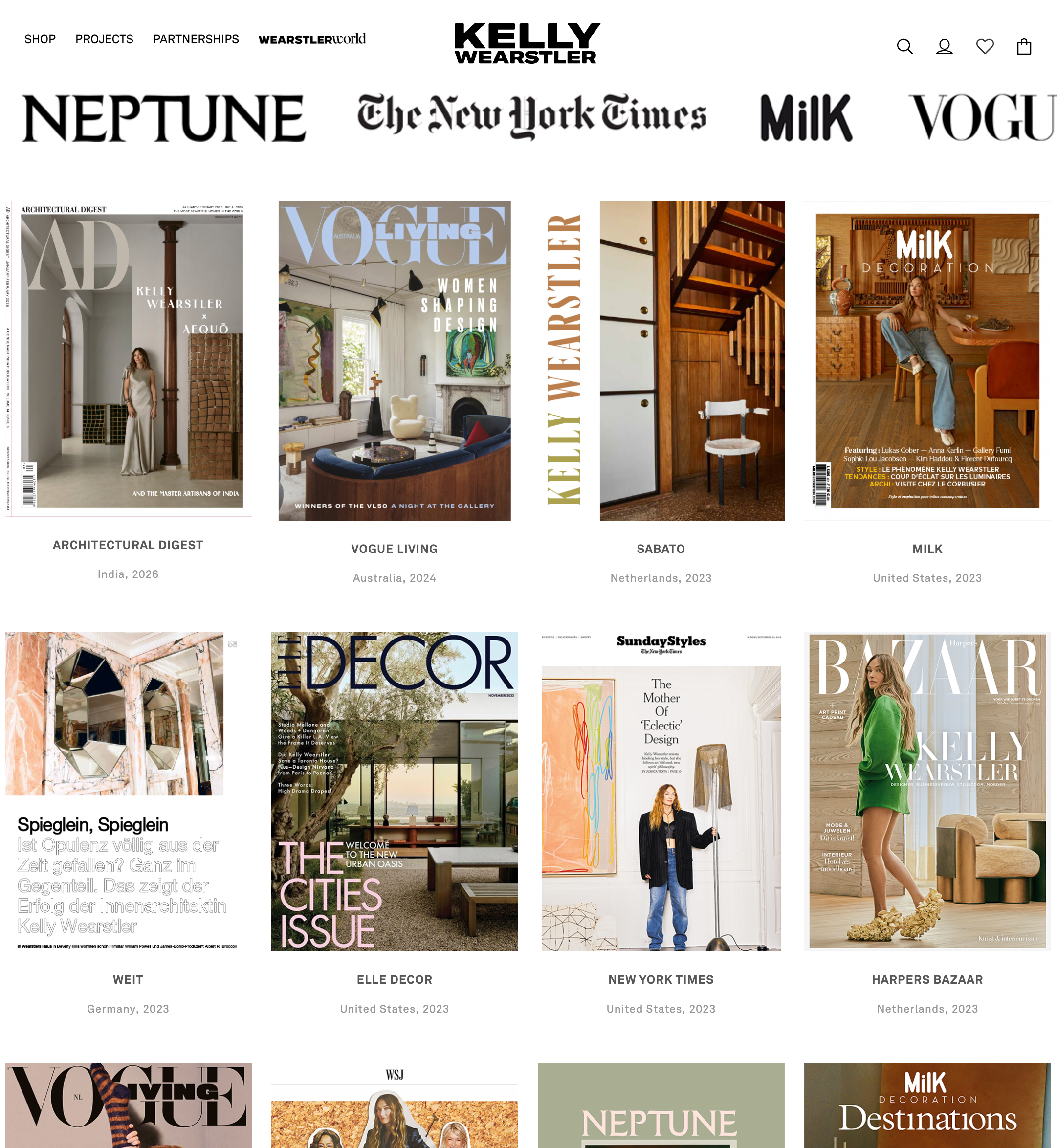
Kelly Wearstler's press page uses the actual magazine covers as the images — the mastheads, cover lines, and editorial photography do all the credibility work at a glance. No logos needed when the cover speaks for itself. This approach works especially well for visual industries where the quality of the publication's design reflects on your own.
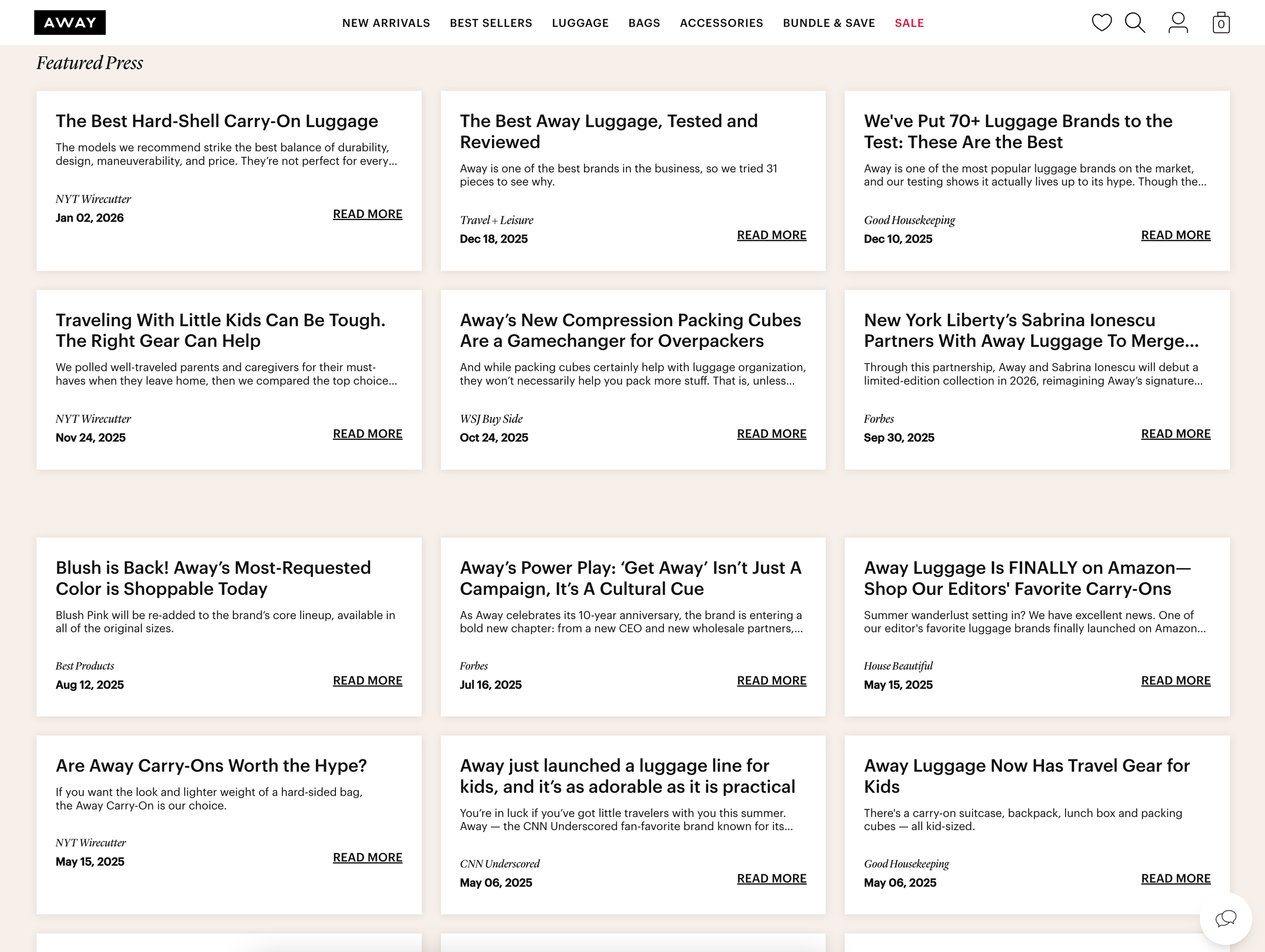
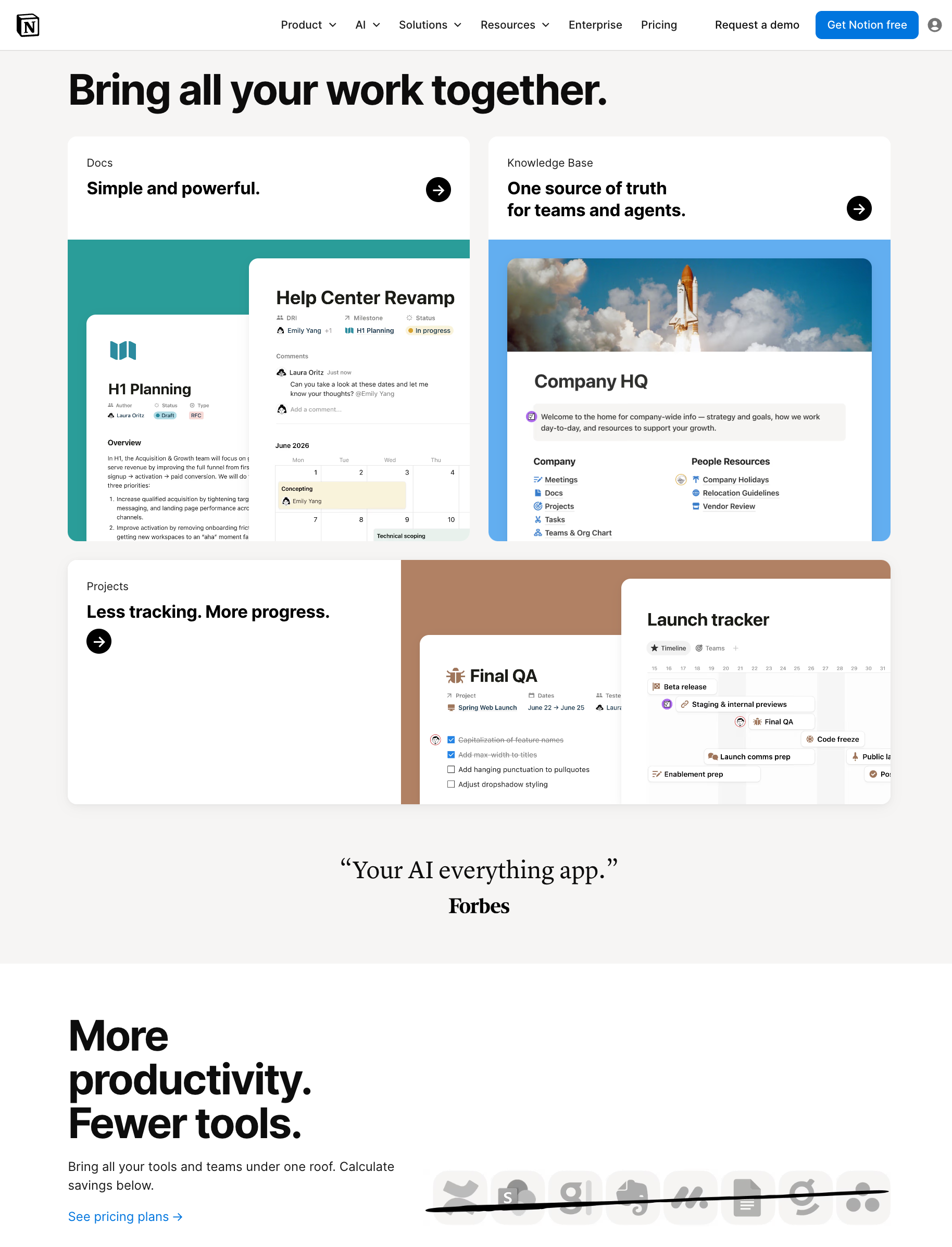
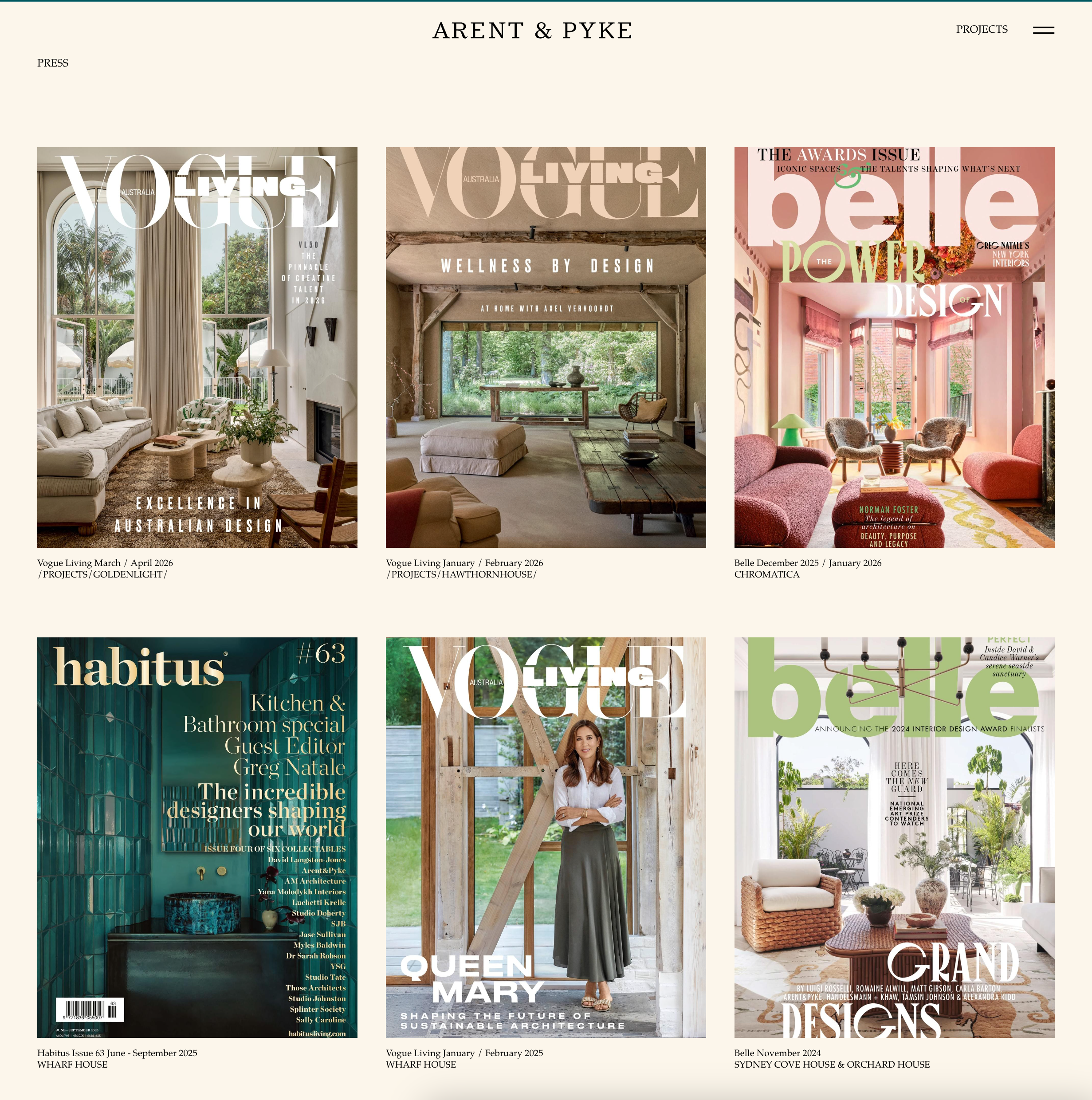
Press page mistakes to avoid
Three things that quietly undermine a press page:
Hiding the mastheads. A masthead is a publication's logo or nameplate — picture the visual mark of Forbes, Vogue, or The New York Times. Familiar, right? A masthead is the fastest credibility signal on your press page. If your design team's thumbnails, brand colors, or custom graphics replace it, you lose that instant recognition. The whole purpose of a press page is to show that credible outside voices are vouching for you, so let their identity do that work.
Mixed mess. Eight strong placements in outlets your audience recognizes will outperform 40 mixed mentions with messy presentation. An uncurated press page with paywalled articles, obscure publications, or broken links signals the opposite of what you intend. If a visitor can't access the article or wouldn't know the outlet, you should probably cut it.
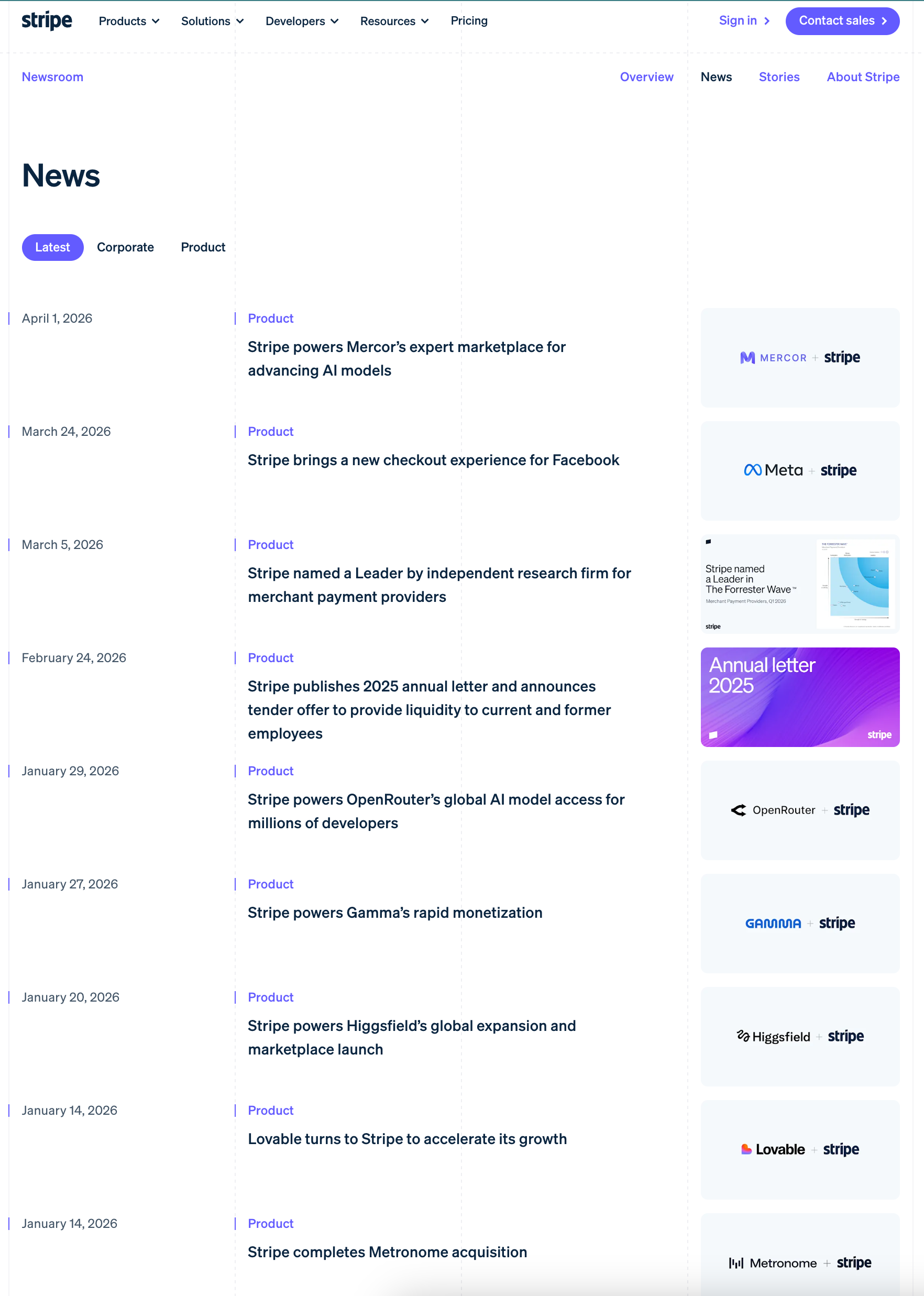
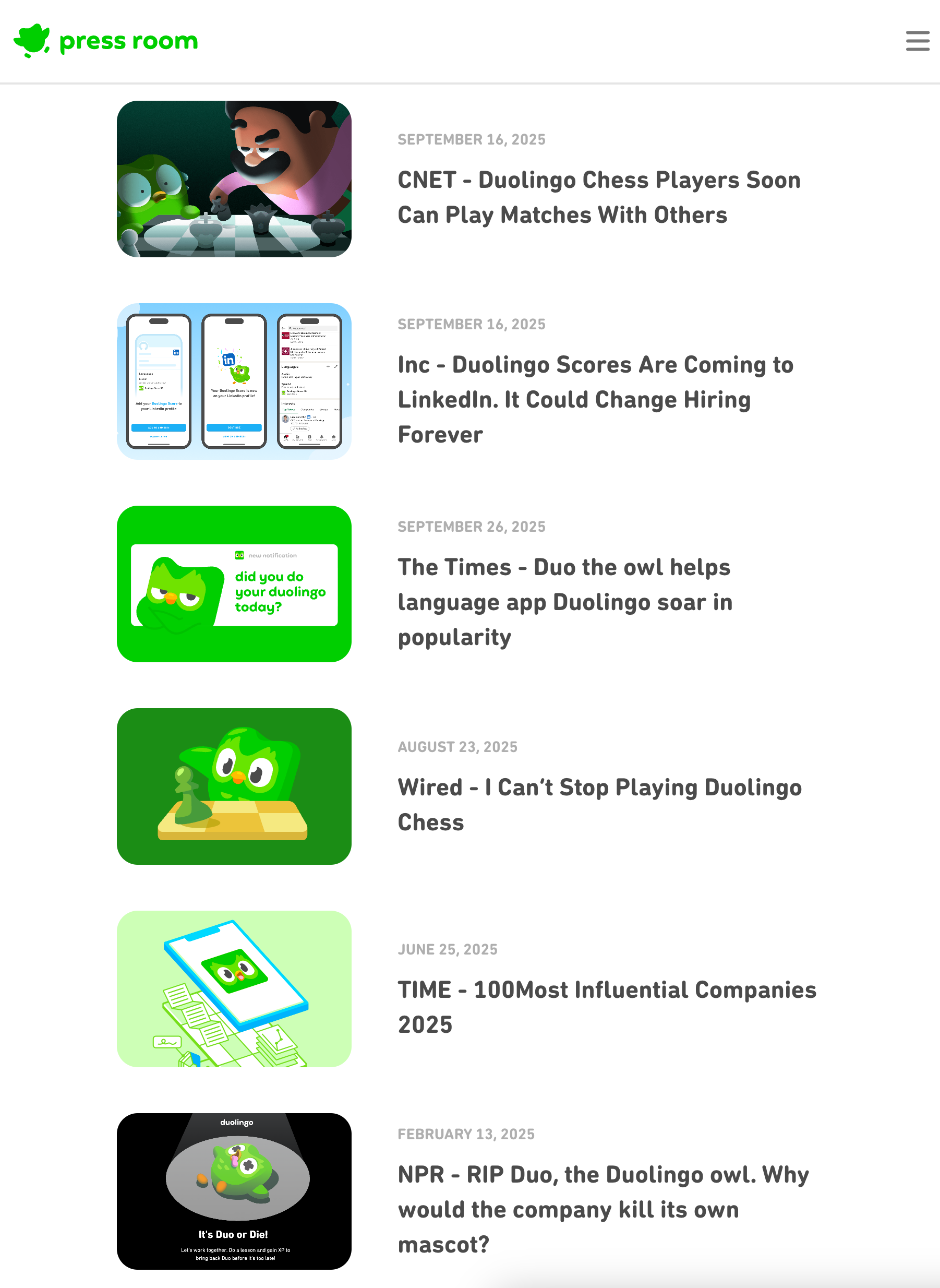
Confusing your news for the news. Your press releases, product launches, and partnership announcements are valuable — but they belong in a Newsroom, not alongside third-party coverage. When prospects see your own content mixed in with earned press, it raises a quiet question: is this page about what others are saying, or what you're saying about yourself? Those are two different things, and mixing them dilutes both.
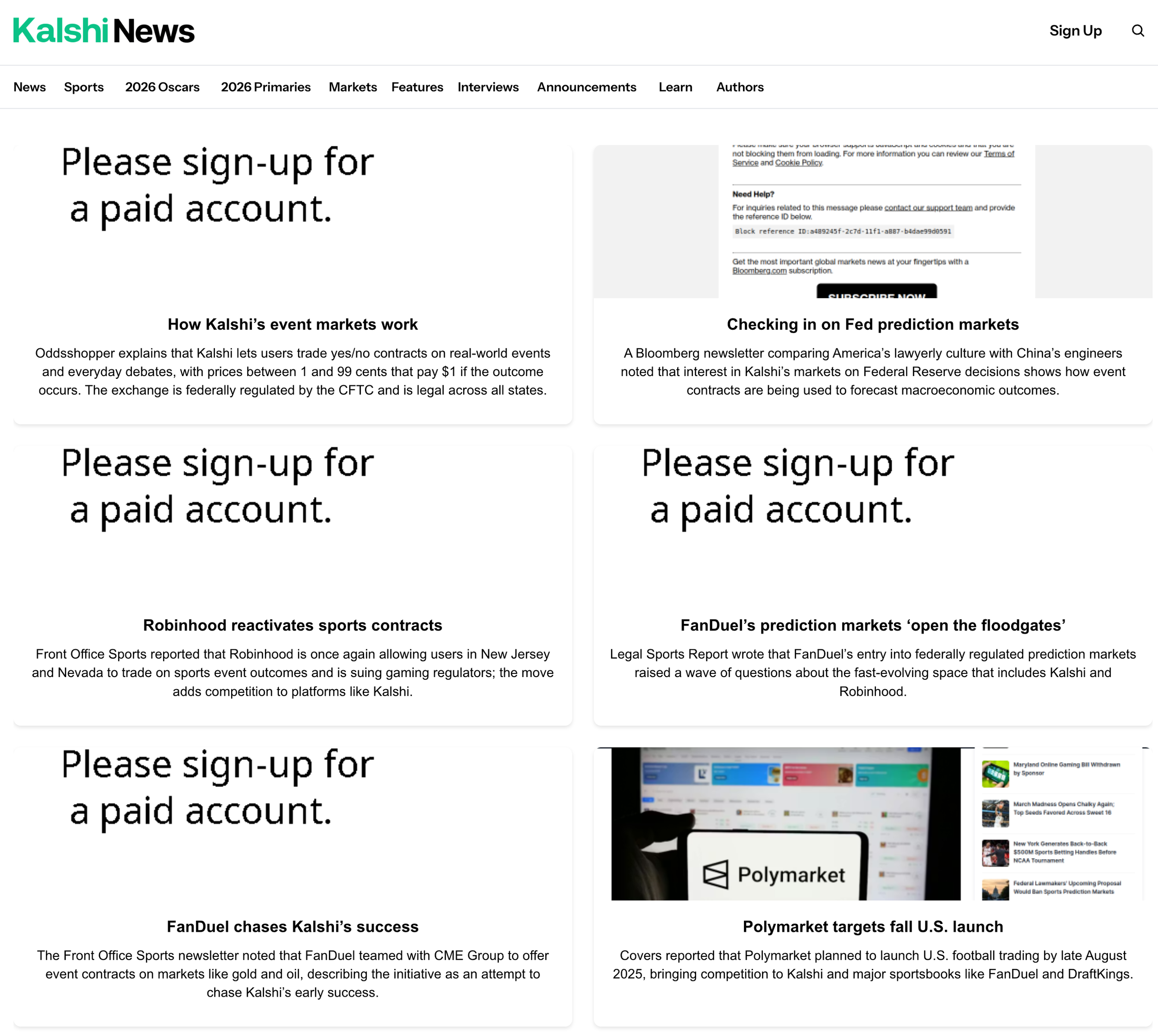
The Invisible Channel: Press Coverage & AI Discoverability
There's a layer of press value that doesn't show up in your analytics — yet. AI tools like ChatGPT, Perplexity, and Google's AI Overviews are increasingly how people research brands, services, and buying decisions. And they don't pull answers from your website. They pull from editorial sources: journalism, features, and quotes in recognized publications.
AI referral traffic grew over 500% in the first half of 2025, and visitors who arrive from AI tools convert at nearly 10x the rate of Google organic traffic. The brands showing up in those answers are the ones with consistent, substantive press coverage in credible outlets — built over time.
In short: the press you earn today is training AI to recommend you tomorrow.
How to Use Press Coverage for Sales Enablement & Conversion
Press coverage is one of the most under-leveraged tools in a sales process. But for anyone selling a service, professional expertise, or another offering that features a significant investment or long sales cycle, press can be a powerful sales enablement lever. Here's how to deploy it at every stage of the buyer journey.
Cold outreach and prospecting: A recent press hit gives you a timely reason to reach out to someone who doesn't know you yet. Instead of a generic intro email, send the article with a brief line connecting it to their specific situation. For example:
"We were just featured in Architectural Digest on how designers are attracting higher-budget clients — thought it might resonate given where you're trying to take the firm."
“We just had a piece run in TechCrunch on how early-stage teams are leveraging AI to identify cybersecurity risks — is that a challenge you’re focusing on?”
It’s not about selling, but about sharing something useful, warming up the relationship, and establishing credibility and awareness of your value to them. Studies consistently show personalized cold emails get roughly double the response rate of generic ones (~18% vs. ~9% according to Saleshandy.)
Similarly, this approach works throughout the sales process. If a piece of relevant coverage drops after a first sales call or really anytime you're mid-conversation with a prospect, send it along. A follow-up email that pairs a relevant press piece with something specific from the conversation shows you were listening, reinforces your expertise, and gives them something to share internally when building the case to convert.
"Saw this and thought of our conversation last week when you were asking about X." This keeps you visible, reinforces your expertise, and makes the follow-up feel value-driven rather than pushy.
LinkedIn connection requests and DMs: A recent press feature is perfect timing for a LinkedIn outreach campaign. Connect with target prospects in the days/week after coverage drops, mention the piece in your note, and make the connection about the topic — not about you.
"Just had a piece run in [Outlet] on [Topic] — would love to connect with others focused on solving this problem." The press validates you before they've ever visited your website.
Proposals, pitch decks and RFPs: Every proposal you send should include a "Why Us" or credibility section with your most relevant press mentions — not a logo dump, but a handful of curated placements with a line of context for each. In competitive bid, press coverage is a differentiator that's difficult for competitors to fake. Include it in the credentials section of any RFP response, and where possible, match the coverage to the specific expertise you're being evaluated on
"Featured in Inc. for our work with early-stage SaaS founders" is more persuasive than a logo alone. The prospect is already in evaluation mode; this is the moment press coverage converts most directly.
Objection handling: When a prospect questions your experience, your pricing, or your track record, a relevant press mention can help close the gap faster than anything you say yourself.
"We haven't heard of you" — Pull your highest-name-recognition placement — not your most relevant one. This is the moment for the Wall Street Journal or Forbes mention, even if the article topic isn't a perfect match. Name recognition closes the credibility gap first; relevance comes second.
"Your fees are higher than competitors we're talking to" — Pull a piece where your approach, methodology, or results were highlighted editorially. Proactively work with your account management and PR teams to create a case study showing real, quantifiable results and success you’ve achieved for a customer, and pitch it to media. A case study validating your impact in third-party media is gold.
"We tried something like this before and it didn't work" — Pull coverage that directly addresses that failure or problem. “We were actually quoted on this in Inc. last year — the reporter was writing about why [X approach] fails and what works instead."
"Can you send me some references?" — Pair your reference list with 2-3 relevant press hits. References speak to past performance while press speaks to recognized expertise.
Pro tip — build a "coverage by use case" folder for your sales team. When a rep is mid-conversation, they need the right piece of press coverage to reference quickly. Get ahead of this by tagging each article by the objection it neutralizes or the client type it speaks to, or whatever would be helpful for your business. "Pricing objection," "credibility gap" or “fintech angle,” “professional services focus” are useful labels for easy searching by the sales org.
More Places to Promote Press Coverage
Lead & Customer Communications
Press coverage reinforces credibility at every touchpoint.
Customer Emails & Newsletters: Share articles framed as educational resources.
Email Signature: A line like "As featured in Forbes | [link]" under every email you send reaches a warm audience passively, indefinitely.
Onboarding Materials: Include coverage in welcome decks to reassure new clients.
Speaking Opportunities
Speaking engagements — whether it’s SXSW, a TEDx talk, or an industry panel — are press-worthy themselves.
Promote on Social: Share video clips, behind-the-scenes photos, or links to event recordings.
Website: Add to bios or About page, especially if it’s a major stage.
Email: Share with your audience as proof of expertise.
Press Page: Include speaking clips right alongside earned coverage.
Your Office
Physical space counts. Visitors notice what you celebrate.
Frame features in your lobby or conference rooms. You can obviously use a printed magazine or newspaper, but you can also print online features. Just make sure you (or a designer) format it cleanly and use high-quality paper and frames.
Showcase awards as trophies, plaques, or photos of the team at ceremonies. For example, an advisory firm displaying a framed Barron’s feature in reception instantly signals credibility.
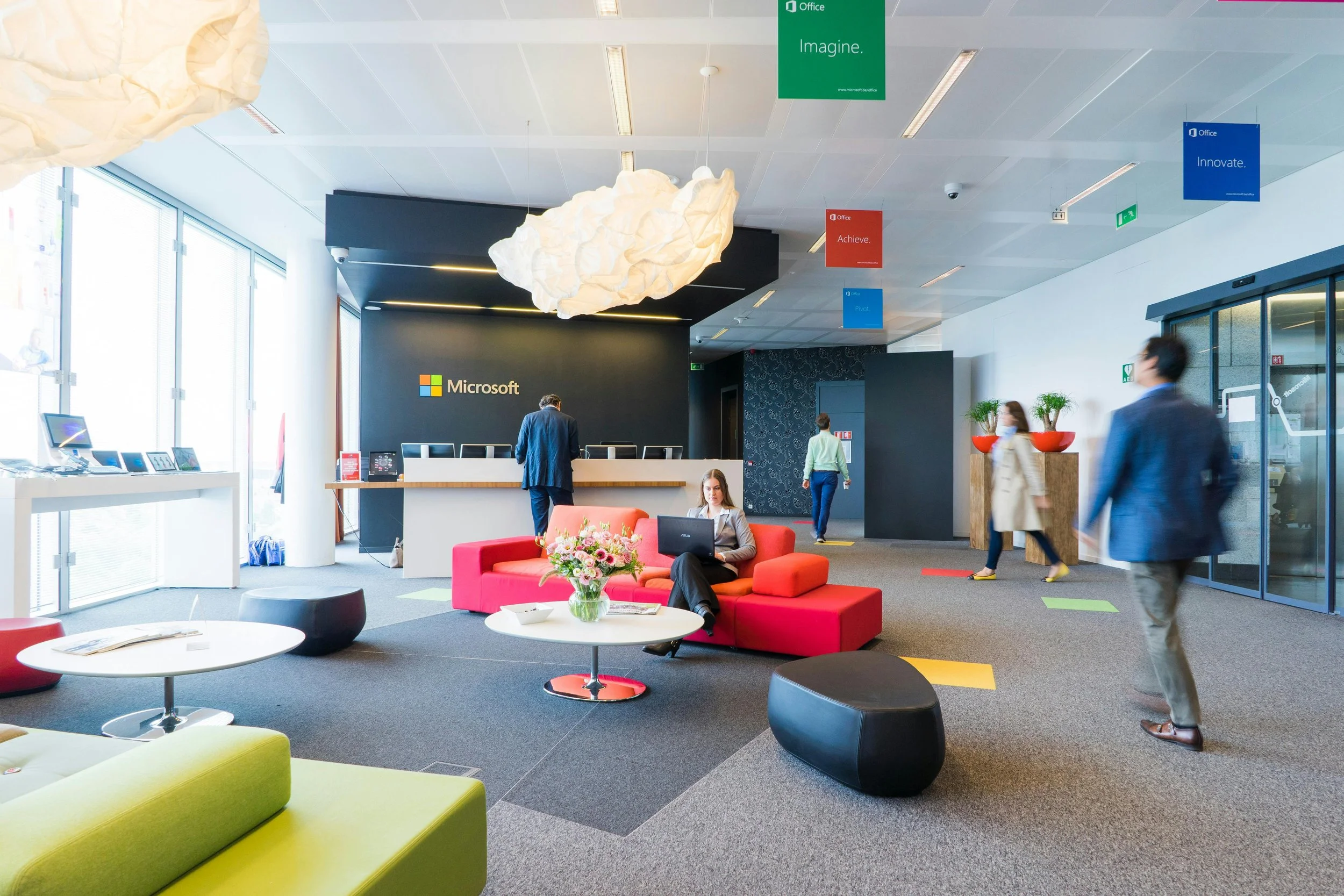
If you have a nice lobby, it’s a great spot to display an award, framed magazine cover, or news clippings.
Industry-Specific Recommendations
Interior Design & Visual Industries
Press is portfolio validation.
Invest in professional photography — it’s essential for both winning and promoting coverage.
Repurpose spreads on Instagram, Pinterest, and portfolio pages.
Frame magazine features in your studio or office.
Your press page should show covers, not just logos. Magazine covers carry the masthead, the editorial photography, and the positioning of the feature all in one image. Link each cover to the specific project featured — press becomes portfolio in one click. (See above Arent & Pyke and Kelly Wearstler examples.)
Financial Services & Advisors
Press is credibility currency in a high-trust industry.
Share carefully on LinkedIn and newsletters; frame as insights, not boasts.
Highlight executive/advisor thought leadership on social media profiles and website bios. Example: “Quoted in CNBC on retirement planning trends.”
Use logos for authority and influence in proposals and other sales collateral.
SaaS & Tech Companies
Press logos are powerful, especially for startups.
Startups: Use a homepage trust bar with “Featured in…” logos. (Later-stage: Focus more on client logos, testimonials, and metrics.)
Always audit what trust signals align with your growth stage and goals (fundraising, lead generation, etc.)
Promote relevant press coverage — it’s okay if it’s a niche media outlet in your industry; it does not need to be a top-tier news outlet to have impact
A note on newsrooms vs. press pages: many tech companies combine earned press coverage with their own announcements, product launches, and press releases in a single "Newsroom" page. This works at scale (Stripe, Apple, Google) because their announcements carry intrinsic news value. For most growing companies, it dilutes earned credibility. When a prospect visits your press page and sees your own press releases alongside third-party mentions, the page loses its core function: showing that credible outside voices have validated you. Keep earned press in one place, owned announcements in another.
Measuring impact
Promotion without measurement is just activity. Here are four metrics worth tracking after you amplify coverage:
Referral traffic: In Google Analytics 4, check Traffic Acquisition and filter for the outlet's domain. You'll see exactly how many visitors came from the article and how they behaved on your site.
Branded search volume: In Google Search Console, track impressions and clicks for your brand name in the weeks following major coverage. A meaningful press hit often causes a lift in people searching for you directly.
Lead source attribution: In your CRM or intake form, "How did you hear about us?" is worth more than it looks. Press mentions frequently appear here weeks or months after publication.
Social engagement on press posts vs. non-press posts: Compare average engagement rate on posts where you share press coverage vs. your standard content. Most brands find press posts outperform significantly. That data is worth having when you're deciding how much time to invest in amplification.
For more, check out, “What’s Earned Media Really Worth? A PR ROI Guide.”
FAQ
Should I include smaller outlets?
Yes, if they’re respected in your niche. No, if they’re obscure or off-brand.
How long should I display press logos?
As long as they’re relevant. Retire outdated or off-brand mentions.
Should I include negative press?
Only if you can provide helpful commentary or context. Otherwise, skip.
Should I post coverage on both my personal and company social accounts?
Yes for LinkedIn. Personal accounts reach more people organically, so consider posting from your personal account first with genuine commentary or context, and then have the company page repost or share it. For other social media platforms, consider whether your coverage makes sense for your audience there. See social media recommendations above for more details.
What if the journalist got details wrong after I've already started sharing it?
Stop sharing immediately. Contact the reporter or editor with a correction request. Most outlets will update online articles. Once corrected, you can resume. Sharing coverage with errors in it is worse than not sharing at all.
Should I boost press posts with paid social?
Yes, selectively. Press content is some of the highest-performing content to put budget behind because the third-party credibility reduces the "ad feel." Even a small boost on a strong press hit can significantly extend reach.
How often should I update my press page?
Ideally, update it as often as you get new coverage — consider weekly. Most content management systems have pretty basic page templates for adding new items to update existing pages. At minimum, update your press page quarterly. Also make sure to audit annually for outdated, off-brand, broken links, or no-longer-accessible coverage and retire anything that no longer reflects where your brand is positioned.
Can I share coverage in my email signature?
Yes — and it's an underused tactic. A line like "As featured in Forbes | [+link]" in an email signature is passive, persistent, and reaches a warm audience with every email you send.